
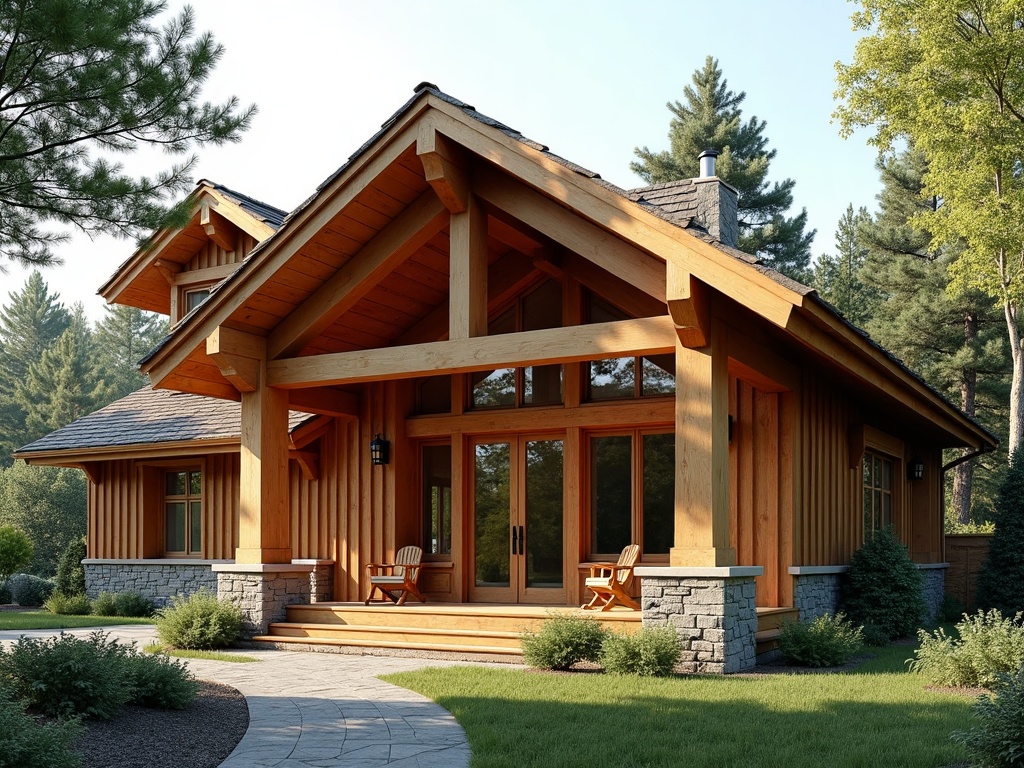

How to Design a Wind-Resistant Home Structure in Storm-Prone Areas
In most cases, the damage caused by wind is indirect, one of its effects enters through the roof, windows, doors (garage), etc and that’s when the wind gets inside and starts pushing everything out, ideal conditions are strong "solid as a rock" buildings to minimize these situations.
Start With The Roof Shape
The place where wind resistance begins is the roof, and its geometry is more important than most people would imagine. A gable roof presents a broad, flat side to the wind. A hip roof deflects wind upward and around the structure rather than catching it. Homes with hip roofs have up to 50% less wind pressure than gable roofs in a high-wind event. The pitch angle determines how the wind will flow over the surface. A low pitch will allow the wind to go underneath the roof. A pitch between 30 and 45 degrees allows a cleaner flow, which reduces drag and uplift forces. A high pitch creates the problem that the gable roof has.
A roof is usually installed with rafters or trusses just sitting on the top plates that form the perimeter of the building. No wonder they slide off in a high wind. What’s called a hurricane tie and sometimes a cyclone clip connects the rafter or truss directly to the wall plate at every junction. They cost about a dollar. The more connections, the more the roof stays on. Skimping on these and letting them be installed in the wrong place causes most roofs to fail in a hurricane.
Use Timber Framing For Ductility, Not Just Strength
Many people believe that concrete and steel provide the best wind resistance. However, unlike concrete and steel, structural timber can flex slightly instead of breaking when subjected to lateral shear force. This makes it the perfect material for extreme wind loads.
Timber Wall Frames made of species such as Western Red Cedar have natural elasticity and excellent resistance to decay. Thus, Timber Wall Frames can absorb wind energy without breaking and support wet, high-humidity storm conditions. When a wall frame distributes lateral wind energy across the entire panel, rather than focusing stress on one joint, the internal forces from the wind are absorbed, decreasing the chances of racking or collapse.
However, studs and headers alone cannot prevent lateral wind loads from pushing your structure over. Exterior sheathing panels (most often plywood or OSB) nail fastened via ring-shanks at a closely-spaced schedule, turn individual stud bays into shear walls. Thus, they work together with the frame to resist the lateral forces trying to push the whole structure over. Under the same shear load, the thickness of a panel, along with the nailing schedule, impacts the results. A panel nail-fastened every 150mm performs vastly different to the exact same panel fastened every 300mm.
Build A Continuous Load Path
A house that does well in strong winds is not a bunch of independent parts that by coincidence are close to each other. Each one of those parts must be directly connected in one continuous chain that goes from the roof, continues down through the walls, and finally reaches the foundation. This chain, better known as the continuous load path, is what prevents the entire structure from falling apart when powerful winds push from various directions simultaneously.
In simpler terms, this signifies that you need to fasten the roof sheathing to the rafters, the rafters to the top plates, the studs to the bottom plates, and finally anchor-bolt the sill plates to the concrete foundation slab. Moreover, each of these connections must be designed to withstand the wind’s force from your specific area. Almost all regions have a standard regarding structural wind action which states the design wind speed of a certain area. This number should determine how many fasteners you need to use, rather than the framing itself.
Protect The Building Envelope Against Pressurization
Internal pressurization is how wind gets inside a structure and doubles the destructive forces already acting on it. When a window fails, a wall breaches, or a garage door buckles inward, the interior fills rapidly with high-pressure air. That pressure acts upward on the roof deck and outward on every wall simultaneously. That’s the logic of shutters, bracing, high-impact glass, and garage reinforcement in a high-wind event. Most people think you’re trying to make that window stronger. What you’re really trying to do is stop the total loss of the building by preventing a single lousy window from degenerating the whole complicated structure.
The Home As A System
There isn’t one magical thing that makes a building resist wind better. The roof shape can direct wind uplift away from corners, but that only works if the roof is well-connected back to the walls. Walls can resist racking and wracking (upward force from high wind pressing against a wall off-balance) when sheathed with products like OSB, but only if the sheathing is continuously connected to the framing (and even that will fail if the roof blows off). Windows are a notorious weak spot, but adding impact-resistant glazing won’t help if the frames aren’t structurally reinforced and the windows aren’t fastened securely to the framing.